Single-Bevel vs Double-Bevel Sharpening: What Changes on the Stones?
Most people think the difference is just "one side sharp versus both." Wrong. A single-bevel knife is basically a wedge. The flat side is dead flat. The beveled side carries all the geometry. Double-bevels? Symmetrical angles meeting in the middle. Simple math. Until you hit the stones. Then everything changes.
Flat Matters More Than You Think
Single bevel sharpening starts with surrender. That flat side has to stay flat. You lay it dead against the stone. No angle. No theatrics. If you rock it even slightly, you ruin the geometry. Double-bevel knives are more forgiving. You rock between two angles. Left side, right side, done. But that flat side on a yanagiba? It owns you.
Your Wrists Are Lying to You
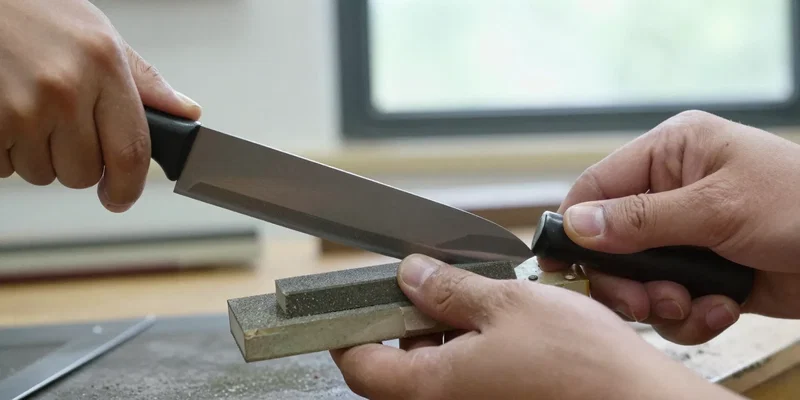
Double bevel sharpening is a rhythm game. Muscle memory carries you. Fifteen degrees this side, fifteen the other. Feel the burr. Flip. Repeat. Single-bevel sharpening is a meditation. One side gets the bevel work. The other gets nothing but a quick kiss to remove the burr. Actually, calling it "sharpening" on the flat side is generous. You're polishing. Barely. And if your angle drifts by two degrees on the beveled side? You just made a completely different knife. Japanese knives demand honesty. Your hands either have it, or they don't.
That Tiny Fold of Metal Means Different Things
With double-bevel edges, the burr tells you the two sides have met. It's your green light. Remove it gently, and you've got symmetry. Single-bevels don't play by those rules. You form a burr on the beveled side, sure. But removing it requires the uraoshi—that hollow-backed flat side. You press lightly. Very lightly. Too much pressure and you flatten the concave geometry. Then your knife steers like a shopping cart with a bad wheel. The burr isn't just a signal. It's a trap.
Match the Stone to Your Patience Level
Double-bevel sharpening fits real life. Twenty minutes, a beer nearby, you're back in business. Single-bevel sharpening demands a Saturday morning and zero interruptions. One distracted angle and your deba is suddenly a letter opener. Japanese knives reward obsession. Double-bevels reward consistency. The stone technique for each is completely different. There's no wrong choice. Just don't pretend a single-bevel yanagiba is a "quick touch-up before dinner." It never is.